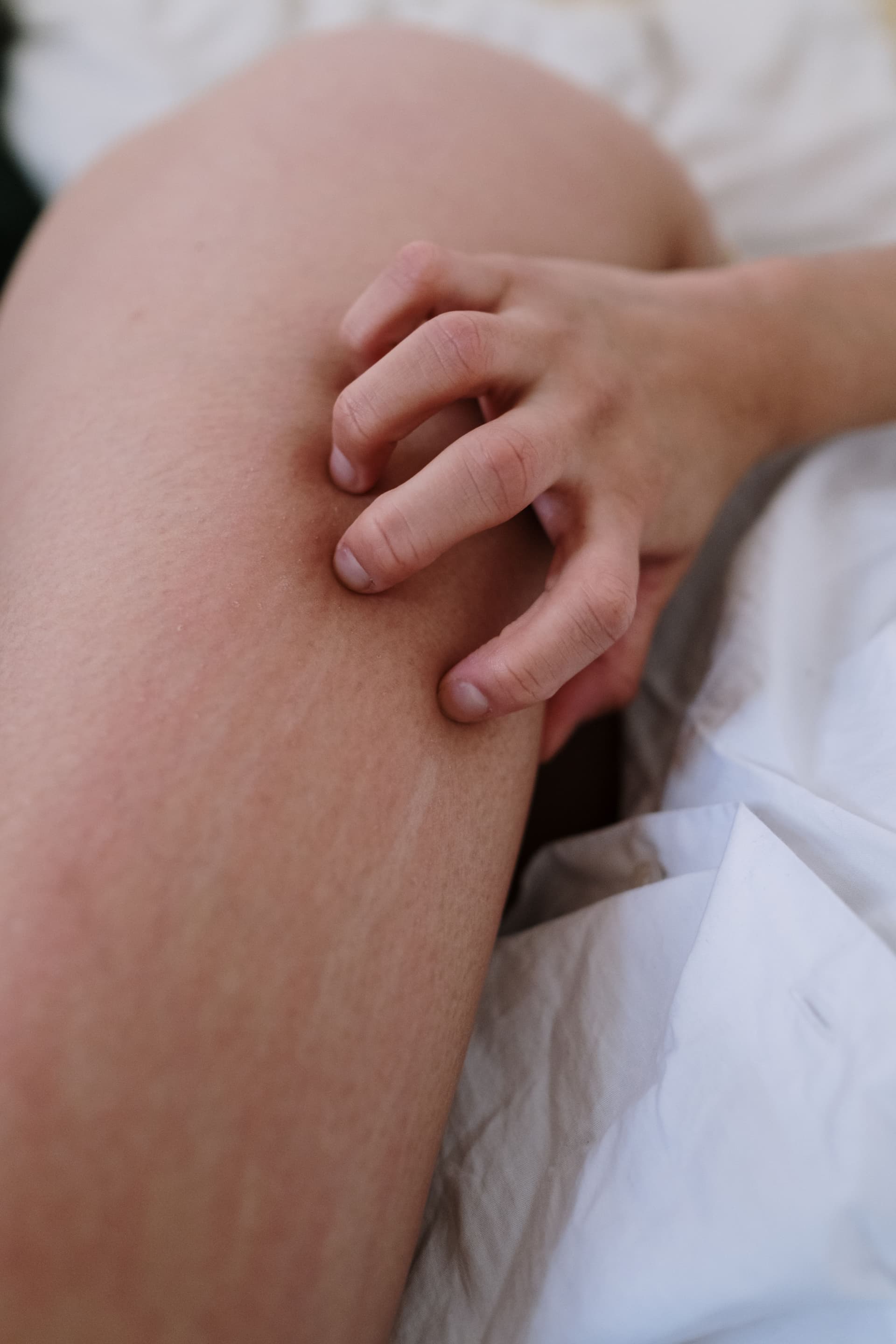
Itching
Intimate itching often signals an unbalanced flora. Common causes and gestures to soothe it for good.
Understanding intimate itching
Itching (vulvar pruritus) is rarely random: it's a warning sign from the skin and lining. The urge to scratch is often intense, sometimes worse at night, and scratching feeds a vicious circle by damaging the skin barrier further.
The most common causes:
- Yeast infection (candidiasis): the #1 cause, often with thick white discharge.
- Bacterial vaginosis: an imbalanced flora, usually with odour.
- Contact dermatitis: scented soaps, wipes, panty liners, laundry detergent.
- Dryness / atrophy (menopause, post-partum) that weakens the lining.
- More rarely: lichen sclerosus, eczema, psoriasis (worth a medical check).
Why it itches
A healthy intimate lining is protected by a flora of lactobacilli and an acidic pH (3.8 to 4.5). When that balance breaks, inflammation sets in and stimulates the nerve endings of the vulva: that is the itch.
Many everyday habits sustain the problem without you suspecting it:
- Scented soaps, shower gels, wipes and douches that strip the protective film.
- Tight synthetic underwear that traps heat and moisture.
- Scented pads and some detergents, sources of contact reactions.
“With itching, the reflex is not to wash more, but to wash less and gentler. Most cases settle by finding the cause, removing irritants and restoring the flora. If it lasts more than a week or recurs, see a clinician to rule out a skin condition.”
What to do day to day
Break the scratch-irritate cycle and let the skin repair.
1. Identify the cause
Thick white discharge → think yeast; odour → BV; after a new product → contact dermatitis. The cause guides the fix.
2. Minimalist hygiene
Lukewarm water or a gentle product at physiological pH, once a day. Stop scented soaps, shower gels, wipes and douches.
3. Remove irritants
Fragrance-free pads, gentle detergent, avoid scented toilet paper. Cotton underwear and loose clothing.
4. Do not scratch
Scratching relieves for 10 seconds then worsens. Cool compresses and a hydrated lining soothe better.
5. Support the flora
A targeted botanical care helps restore a protective acidic pH, an unfavourable ground for itching.
What to expect
An indicative guide: every skin responds at its own pace.
Days 1-2
Remove irritants
Stopping scented and harsh products lets the irritation stop worsening.
Days 1-2
Remove irritants
Stopping scented and harsh products lets the irritation stop worsening.
Days 3-5
Relief
Less aggravated, the lining starts to repair and itching eases.
Days 3-5
Relief
Less aggravated, the lining starts to repair and itching eases.
1-2 weeks
Back to comfort
With supported flora, comfort returns and the urge to scratch fades.
1-2 weeks
Back to comfort
With supported flora, comfort returns and the urge to scratch fades.
If > 1 week
See a doctor
Persistent itching, lesions or recurrence: medical advice rules out resistant yeast or a skin cause.
If > 1 week
See a doctor
Persistent itching, lesions or recurrence: medical advice rules out resistant yeast or a skin cause.
Why act, and when to see a doctor
Itching settles well; some signs call for medical advice.
Stop the discomfort
A soothed vulva, day and night, with no urge to scratch.
Prevent recurrence
A balanced flora and a gentle routine reduce the risk of recurrent yeast and itching.
Repair the skin
Fewer irritants means a skin barrier that rebuilds and resists better.
When to see a doctor
See a doctor if itching lasts beyond a week, recurs, or comes with lesions, white patches or bleeding.
Your questions about intimate itching
No. Yeast is common, but BV, contact dermatitis or dryness can also itch. If an antifungal changes nothing in a few days, it probably is not yeast: see a clinician.
Quite the opposite. Frequent washing, scented products or douching strips the flora and worsens itching. One gentle wash a day is enough.
Yes. Scented liners and pads, and some detergents, are common causes of contact reactions. Favour fragrance-free and cotton.
For mild hygiene-related irritation, removing irritants and supporting the flora is often enough. A confirmed yeast or infection needs proper treatment.
See a doctor if itching lasts more than a week, recurs, or comes with white patches, fissures or bleeding (vaginitis recommendations, AFP 2018).
Satisfied or refunded - 30 days
You have 30 days to try it in real-life conditions. If you are not convinced, full refund, no questions asked.
We deeply believe in the effectiveness of our Botanical Extracts. Contact us at bonjour@intiviae.com and we will process the refund immediately.